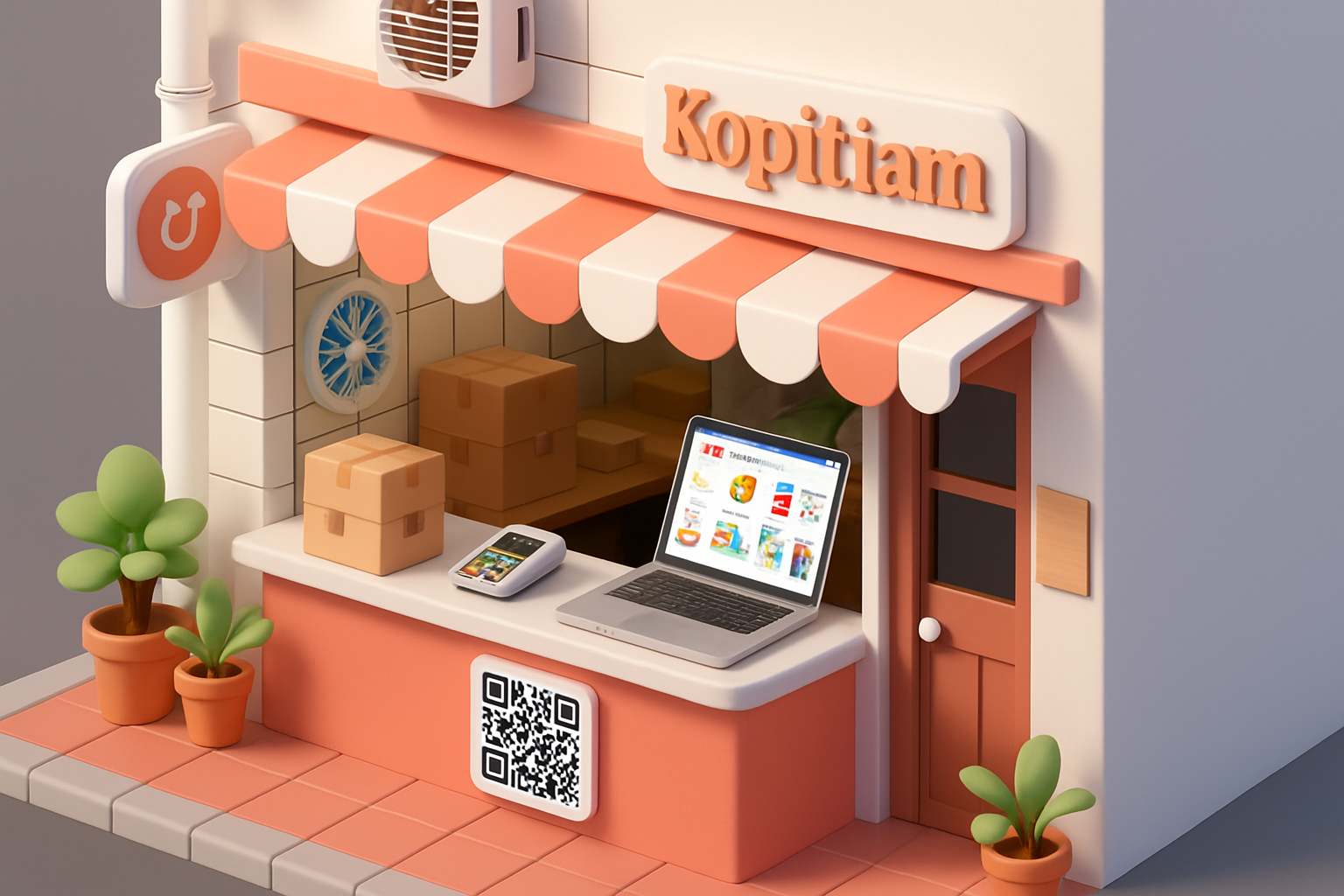
Signing up with the wrong payment provider is easy to do and annoying to undo. Before you commit, five things decide whether you’ll still be happy a year from now: the payment methods your customers actually use, hidden monthly fees, unified reporting, onboarding speed, and a local point of contact when something breaks.
Key takeaways
- Confirm support for cards, NFC contactless and QR wallets – essential if you sell both online and in person.
- Watch for flat monthly fees and minimum processing requirements; at low volume a no-monthly-fee provider is usually cheaper.
- One dashboard for online and in-store sales saves hours on reconciliation, GST filing and refund tracking.
- Ask which documents are required and the realistic approval timeline – slow onboarding directly delays revenue.
- Check for a Singapore-based support contact before you need one.
Running a small or medium-sized business in Singapore means wearing a lot of hats. Finance, operations, customer service, marketing – often all at once. So when it comes to setting up payments, most business owners just want something that works, without spending two weeks comparing fine print.
The problem is that signing up with the wrong payment provider is easy to do and annoying to undo. You’re mid-year, customers are paying, and switching platforms means updating checkout links, retraining staff, and potentially losing transaction history.
Here are five things worth checking before you commit.
1. Does It Support the Payment Methods Your Customers Actually Use?
Singapore has a diverse payment landscape. Yes, cards dominate – but contactless tap-to-pay and QR-based payments (via PayNow and e-wallets) are increasingly standard, especially for physical retail.
If you run a shop or café alongside an online store, you need a provider that handles both. That means:
- Credit and debit card acceptance (Visa, Mastercard, at minimum)
- NFC/contactless terminal support
- QR code wallet compatibility
Missing any of these creates friction at the point of sale – and friction costs you sales.
When evaluating providers, ask specifically: what payment methods are supported for in-person transactions in Singapore? Some providers offer online payment tools but have no POS hardware at all.
ONE Payments, for example, offers both online payment acceptance and POS terminals for Singapore merchants – accepting cards, contactless, and QR-code wallets – under a single account. That means less juggling between systems and one place to look when you need to reconcile sales at the end of the day. Talk to the team about what fits your setup.
2. Are There Hidden Monthly Fees?
This sounds obvious, but it catches a lot of businesses out. Payment providers structure their fees in all sorts of ways:
- Flat monthly platform fees (charged regardless of volume)
- Minimum monthly processing requirements (with penalties if you fall short)
- Tiered pricing that only becomes favourable at volumes you haven’t reached yet
For an SME that might have quieter months, a fixed monthly cost is a real drag. The math changes significantly when you compare a provider charging 3% with no monthly fee versus one charging 2.5% plus $60/month. At lower volumes, the former is almost always cheaper.
Ask for a full breakdown of every recurring charge before signing. If the provider is reluctant to provide that, treat it as a red flag.
3. Can You See Everything in One Place?
This is underrated. If you run both online and in-person sales, you ideally want a single dashboard that shows all transactions, fees, and settlements – not two separate logins with two separate exports that you merge in a spreadsheet every Monday.
Unified reporting matters for:
- Daily reconciliation
- GST filing
- Spotting unusual refund patterns early
- Understanding which channel is performing better
The more fragmented your payment setup, the more time you spend on admin instead of running your business. Before committing to a provider, ask to see a demo of the reporting interface. Is it something you can actually read and act on, or does it require a finance degree to interpret?
4. How Long Does Onboarding Actually Take?
One of the most common complaints from SME owners about payment providers is slow or frustrating onboarding. You apply, submit your documents, and then wait. Sometimes for weeks.
For a business that’s ready to start taking payments now, a drawn-out approval process is more than an inconvenience – it directly delays revenue.
Ask upfront: what documents are required? What’s the typical approval timeline? Is there a dedicated contact person handling your application, or does everything go into a queue?
Speed isn’t everything, but knowing the realistic timeline helps you plan around it.
5. Is There a Local Point of Contact When Things Go Wrong?
At some point, something will go wrong. A payment will fail inexplicably. A customer will dispute a charge. The terminal will stop connecting. These are facts of business life.
What matters is how quickly you can get help – and from someone who actually understands your situation.
Large international payment platforms often route Singapore businesses to overseas support centres with long response times and agents unfamiliar with local payment methods or regulations. Check whether the provider has a Singapore-based team or at least a dedicated support contact for your region.
Reviews on Google, Trustpilot, and local business forums are a useful signal here. Filter specifically for SMEs and small businesses – their experience is more likely to match yours than reviews from large enterprises with dedicated account managers.
A Practical Starting Point
If you’re evaluating payment providers as a Singapore SME, ONE Payments is worth looking at. It’s built specifically for businesses operating in Singapore and the broader Southeast Asian region, with online and in-person payment acceptance, no monthly fees, and an all-in-one dashboard for managing transactions across channels.
Getting started doesn’t require a long-term contract or a large technical setup. If you want to understand whether it fits your specific business model, a direct conversation is the most efficient way to find out.